In the Four Creatures curriculum, the first three movement sets all belong to the Ox, and focus on coherent movement, penetration and percussion, and compacting the opponent, depriving him of space to do…whatever it is he might have in mind. He may be better than us; we’re not going to give him a chance to prove it.
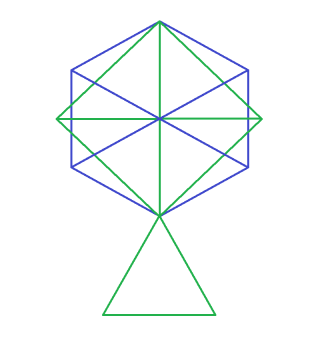
Your first movement set, the triangle exercise, trains you in the basics of strong movement and how to apply it. You will learn useful movements for upper-body and lower-body counterattack, optimal angles for displacement and balance destruction, and fundamentals of both empty-hand and weapon work.
Djuru Satu, your first real form, trains you in the masculine side of Ox, the attitude of the ‘Falling Wall’ — the strong, straightforward tactics that close with your opponent, disrupt his balance, and batter him to the point of incapacitation. Defensively, it introduces the attitude of the ‘Thorny King’ — a way of intercepting attack that allows the attacker to damage himself.
Lanka Dua, your second form, opens up new vistas for the tactical applications of the strong legwork you’ve built in the first two movement sets and introduces the feminine side of Ox, employing evasive handwork and laying a strong foundation for weapons work. The attitude of the bamboo — whiplash and ricochet — is a particular focus, as is sticking to and mirroring the opponent.
Getting through those three sets will take two to three years. If you stop there, you have a reasonable technical foundation for a lifetime of martial practice. The truth is, any good form is a fighting system in itself. You could stop with one movement set, spend the rest of your training time cultivating your attitude, and be good for 95% of everything you could ever run into. But there’s a lot in even the first movement set that you won’t discover until you’ve got at least one more form for comparison and contrast — the more you have, the more you can get from each thing you have. So the three Ox sets work together as a very useful base.
If you continue, Four Creatures offers another two to three years of material. The additional three forms — one each for Lion, Eagle, and Man — add additional dimensions to your practice.
Lion focuses on the principle of destruction, ramping up your ability to do incredible amounts of damage very quickly, and cultivating the necessary attitudes. Lion includes a close study of destructive anatomy, and the associated drills cultivate whole-body suppleness and strength, including exceptional finger strength. That suppleness is in turn the foundation for both substantial power generation and the ability to absorb impact without injury.
Eagle focuses on evasion, disengagement and re-engagement, and the single decisive attack. (You aren’t ready to try a single decisive attack until you’re well-prepared to follow up if it fails.) Eagle exercises cultivate tendon and small-muscle strength and coordination, off-timing, sudden speed in any direction, decoying and misdirection, and the “awfully sudden change,” which is as much about your attitude as your physicality.
Every higher mammal avoids seriously injuring its own kind, and we are no exception. But like most species, those instincts cause us to turn fights into contests of raw physical ability. Only after ‘turning off’ our instincts to oppose force with force — a lesson learned in the first three animals — are we prepared to re-engage the goal of subduing an attacker without injury. The Human level unites the three animals into a seamless whole and refines all their skills to another level, developing the body’s ability to issue and receive force resiliently and at will, and to use those abilities to trap and tangle an opponent while doing minimal damage. It also cultivates the ability to use our knowledge of anatomy and the body to heal and serve people, not just hurt them. Completing this level includes developing sufficient skill at some form of health and healing practice to benefit your community.
Having absorbed those additional dimensions to your practice, you not only have a solid, diverse foundation for your martial practice, you also have learned how to learn. You have cultivated an ability to absorb radically different forms and focuses into a single unified practice. With that under your belt, you can go wherever you want and learn whatever interests you — for the rest of your life.
 Four Creatures Kuntao Silat